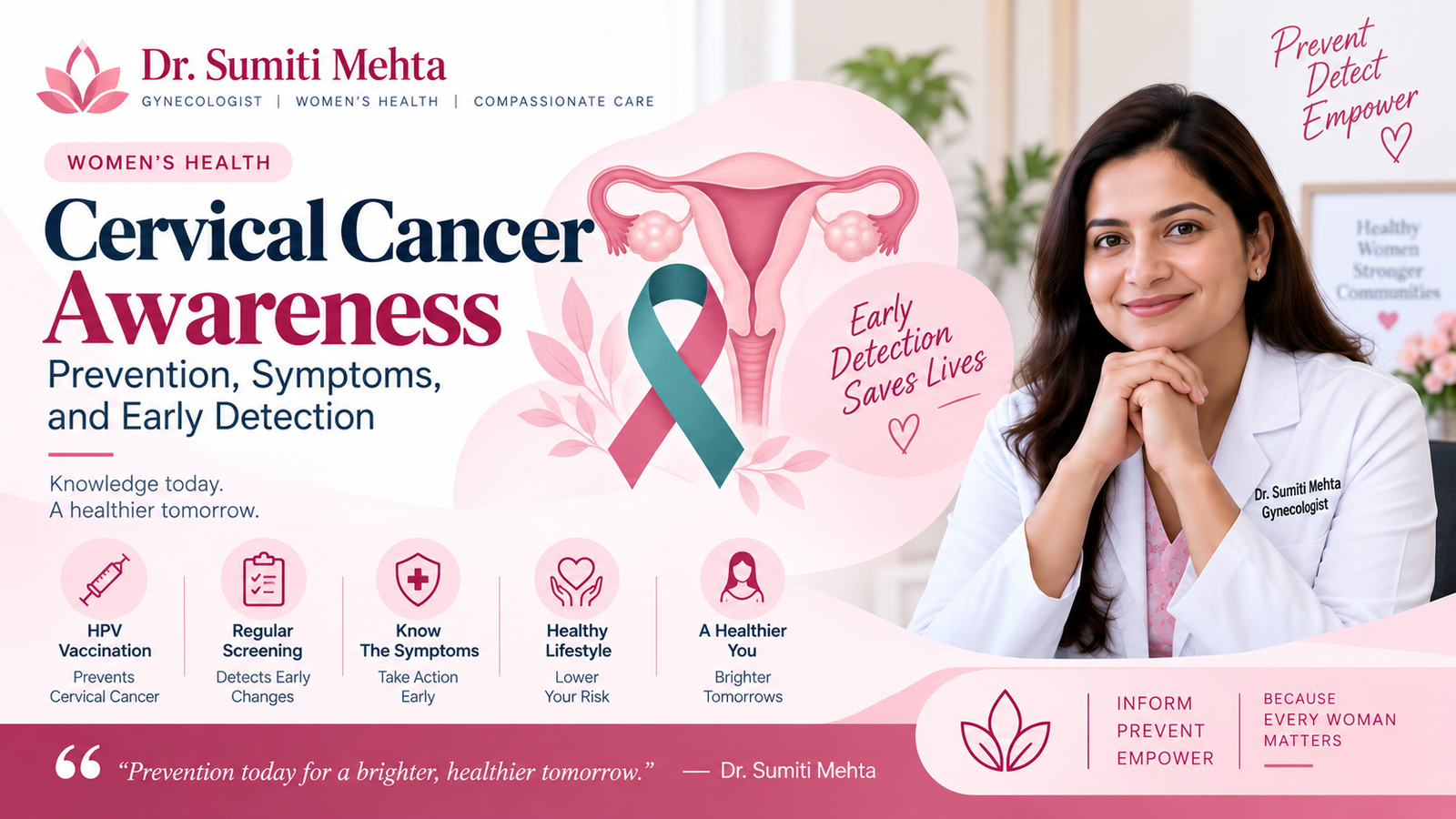

Cervical Cancer Awareness: Prevention, Symptoms, and Early Detection
Cervical cancer is one of the most preventable forms of cancer when detected early through regular screening and vaccination. Awareness about risk factors, symptoms, and preventive measures can help women protect their health and improve treatment outcomes.
At Dr. Sumiti Mehta's clinic, we believe that early detection saves lives.
What is Cervical Cancer?
Cervical cancer develops in the cells of the cervix, which is the lower part of the uterus connecting to the vagina. Most cases are linked to persistent infection with certain types of the Human Papillomavirus (HPV).
Regular screening can identify abnormal cell changes before they develop into cancer.
Key Facts About Cervical Cancer
Fact | Information |
|---|---|
Main Cause | Persistent HPV Infection |
Preventable | Yes |
Screening Test | Pap Smear & HPV Test |
Vaccine Available | Yes |
Early Detection | Highly Treatable |
Common Symptoms
In early stages, cervical cancer may not cause noticeable symptoms.
As the condition progresses, symptoms may include:
Unusual vaginal bleeding
Bleeding after intercourse
Bleeding between periods
Pelvic pain
Pain during intercourse
Unusual vaginal discharge
Lower back pain
If you experience any of these symptoms, consult a gynecologist promptly.
Risk Factors
Risk Factor | Impact |
|---|---|
HPV Infection | Primary cause |
Smoking | Increases risk |
Weakened Immunity | Higher susceptibility |
Multiple Sexual Partners | Increased HPV exposure |
Lack of Screening | Delayed detection |
Importance of HPV Vaccination
The HPV vaccine significantly reduces the risk of cervical cancer by protecting against the most common cancer-causing HPV types.
Benefits of HPV Vaccination
✅ Prevents HPV infection
✅ Reduces cervical cancer risk
✅ Safe and effective
✅ Recommended for adolescents and young adults
Screening Saves Lives
Pap Smear Test
A Pap smear checks for abnormal cervical cells before they become cancerous.
HPV Test
Detects high-risk HPV infections that may lead to cervical cancer.
Screening Recommendations
Age Group | Recommended Screening |
|---|---|
21-29 Years | Pap Smear Every 3 Years |
30-65 Years | Pap Smear + HPV Test as Advised |
Above 65 Years | Based on Medical History |
Always follow your doctor's recommendations regarding screening schedules.
How to Reduce Your Risk
Healthy Lifestyle Tips
Healthy Habit | Benefit |
|---|---|
HPV Vaccination | Prevents infection |
Regular Screening | Early detection |
Avoid Smoking | Lowers risk |
Safe Sexual Practices | Reduces HPV exposure |
Strong Immunity | Better protection |
Warning Signs Requiring Immediate Attention
Seek medical advice if you notice:
🚨 Persistent abnormal bleeding
🚨 Bleeding after menopause
🚨 Pelvic pain lasting several weeks
🚨 Unusual vaginal discharge
🚨 Pain during intercourse
Cervical Cancer Prevention Checklist
Checklist | Status |
|---|---|
HPV Vaccination Taken | ☐ |
Routine Pap Smear Completed | ☐ |
Annual Gynecological Visit | ☐ |
Healthy Lifestyle Maintained | ☐ |
Awareness of Symptoms | ☐ |
Final Thoughts
Cervical cancer is largely preventable through vaccination, regular screening, and early medical intervention. Understanding the risks and staying proactive about your health can make a significant difference.
Regular gynecological checkups are one of the most effective ways to protect your reproductive health and ensure early detection of any abnormalities.
Dr. Sumiti Mehta is committed to helping women stay informed, healthy, and empowered through preventive healthcare and personalized medical guidance.