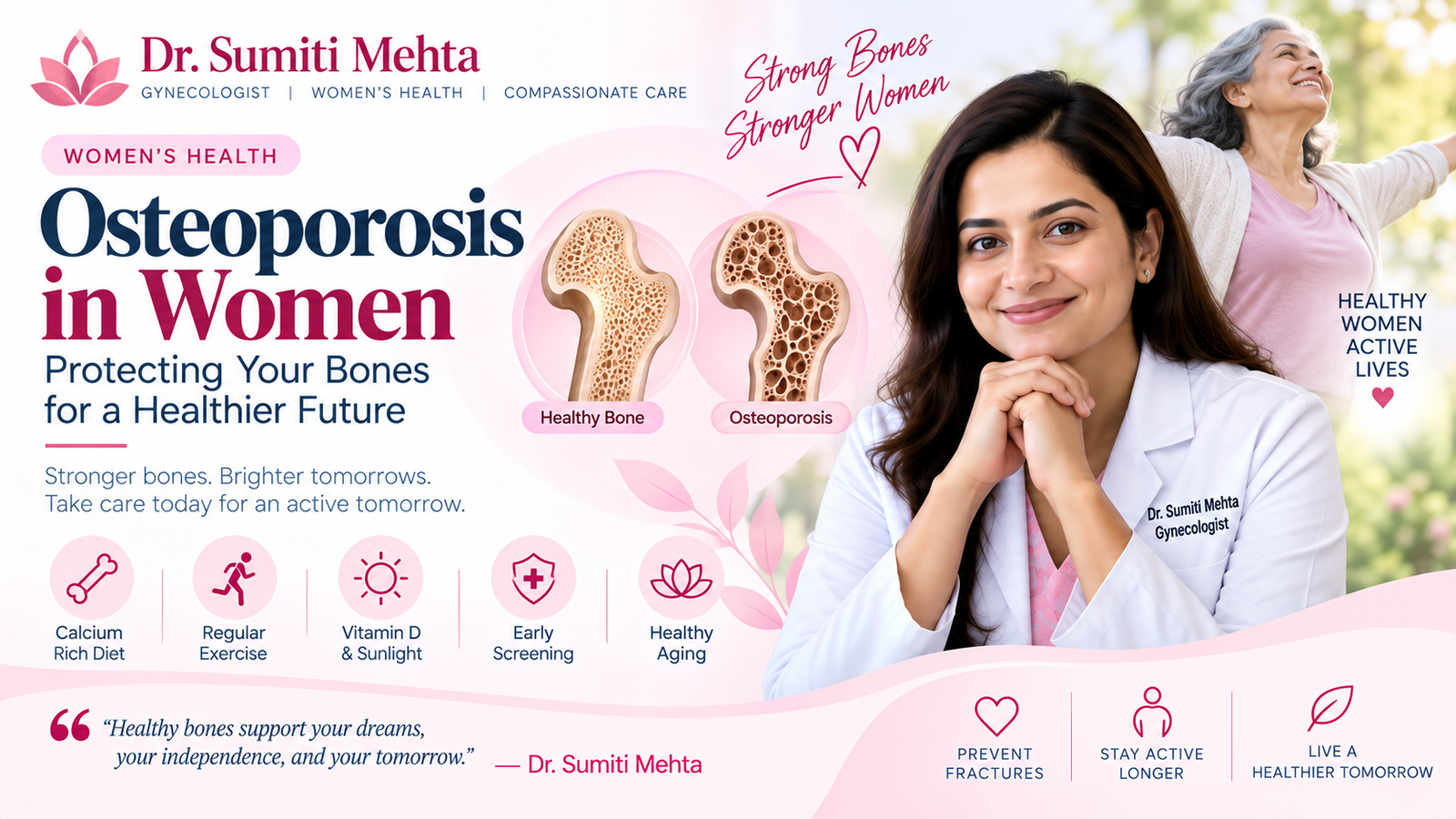

Osteoporosis in Women: Protecting Your Bones for a Healthier Future
Bone health is an essential part of overall well-being, especially for women as they age. Osteoporosis is often called a "silent disease" because bone loss can occur without noticeable symptoms until a fracture happens. Women, particularly after menopause, are at a higher risk due to declining estrogen levels. (NIAMS)
Understanding osteoporosis and taking preventive measures early can help maintain strong bones and reduce the risk of fractures.
What is Osteoporosis?
Osteoporosis is a condition in which bones become weak, fragile, and more likely to break. It occurs when bone loss happens faster than new bone formation, reducing bone density and strength. (NIAMS)
Common fracture sites include:
Hip
Spine
Wrist
These fractures can significantly affect mobility and quality of life. (World Health Organization)
Why Are Women More at Risk?
Women are more likely to develop osteoporosis because estrogen helps maintain bone density. After menopause, estrogen levels decline, accelerating bone loss. (World Health Organization)
Major Risk Factors
Risk Factor | Explanation |
|---|---|
Menopause | Reduced estrogen levels |
Age Above 50 | Bone loss increases with age |
Family History | Genetic predisposition |
Low Body Weight | Lower bone reserves |
Smoking | Weakens bone health |
Excess Alcohol | Increases fracture risk |
Physical Inactivity | Reduces bone strength |
Common Signs and Symptoms
In the early stages, osteoporosis may not cause symptoms. Many women discover it only after a fracture. (NIAMS)
As bone loss progresses, symptoms may include:
Loss of height
Back pain
Stooped posture
Fragility fractures
Increased risk of falls and injuries
Osteoporosis Risk Assessment Table
Factor | Low Risk | Higher Risk |
|---|---|---|
Age | Under 50 | Above 50 |
Physical Activity | Regular Exercise | Sedentary Lifestyle |
Calcium Intake | Adequate | Low Intake |
Smoking | Non-Smoker | Smoker |
Menopausal Status | Premenopausal | Postmenopausal |
Family History | None | Present |
Best Foods for Strong Bones
A balanced diet rich in calcium, vitamin D, and protein supports bone health. (World Health Organization)
Nutrient | Benefits | Food Sources |
|---|---|---|
Calcium | Builds strong bones | Milk, yogurt, cheese |
Vitamin D | Helps absorb calcium | Sunlight, fortified foods |
Protein | Maintains bone structure | Eggs, fish, pulses |
Magnesium | Supports bone strength | Nuts, seeds |
Vitamin K | Bone metabolism | Green leafy vegetables |
Exercise for Bone Health
Regular weight-bearing exercise helps improve bone density and reduce fracture risk. Walking and resistance exercises have been shown to support bone health. (WHO IRIS)
Recommended activities:
✅ Walking
✅ Strength training
✅ Yoga
✅ Stair climbing
✅ Light jogging (if medically appropriate)
Bone Density Testing
Your doctor may recommend a Bone Mineral Density (BMD) test or DEXA scan to evaluate bone strength and determine osteoporosis risk. Screening is commonly recommended for women aged 65 and older and for younger women with significant risk factors. (MedlinePlus)
Prevention Checklist
Healthy Habit | Status |
|---|---|
Daily Calcium Intake | ☐ |
Adequate Vitamin D | ☐ |
Regular Exercise | ☐ |
Avoid Smoking | ☐ |
Limit Alcohol | ☐ |
Routine Health Checkups | ☐ |
Bone Density Screening (if advised) | ☐ |
When Should You Consult a Doctor?
Schedule a consultation if you:
Are above 50 years of age
Have experienced a fracture after a minor fall
Have a family history of osteoporosis
Are postmenopausal
Have chronic back pain or loss of height
Early diagnosis allows timely treatment and prevention of complications.
Final Thoughts
Strong bones are the foundation of an active and independent life. While osteoporosis becomes more common with age, healthy lifestyle choices, proper nutrition, and regular medical checkups can help protect your bone health.
At Dr. Sumiti Mehta's Clinic, we encourage women to prioritize bone health, especially during and after menopause, to maintain strength, mobility, and confidence for years to come.