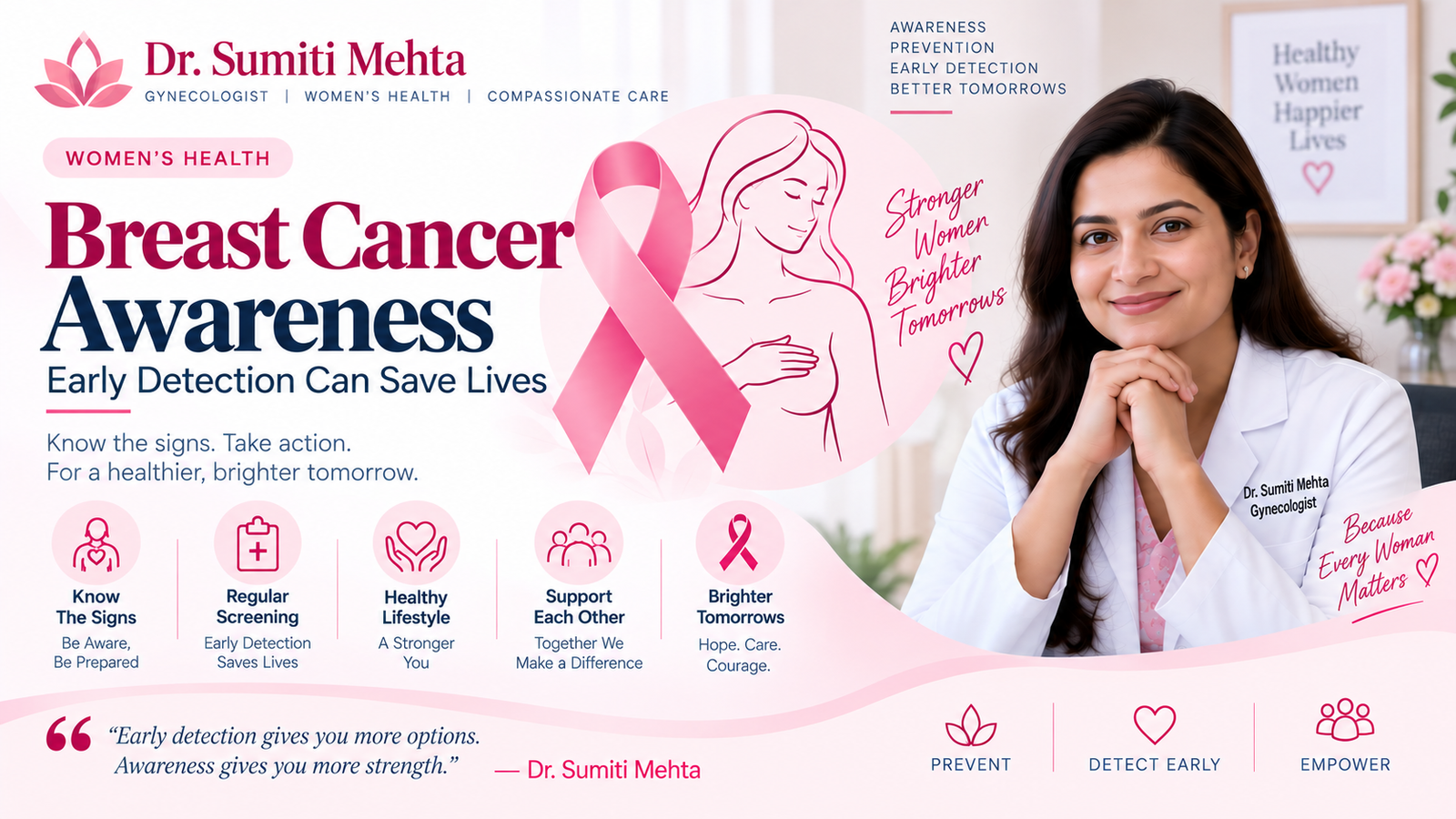

Breast Cancer Awareness: Early Detection Can Save Lives
Breast cancer is one of the most common cancers affecting women worldwide. While the diagnosis can be overwhelming, early detection and timely treatment significantly improve outcomes. Understanding the warning signs, risk factors, and screening options empowers women to take charge of their health.
Regular breast health awareness and routine screenings play a crucial role in saving lives.
What is Breast Cancer?
Breast cancer occurs when abnormal cells in the breast begin to grow uncontrollably. These cells may form a lump or tumor and can spread to other parts of the body if not treated early.
Fortunately, advancements in medical care have made breast cancer more treatable than ever before, especially when detected in its early stages.
Common Signs and Symptoms
Women should be aware of the following warning signs:
Symptom | What to Look For |
|---|---|
Breast Lump | New lump or thickened area |
Change in Size | One breast becoming larger or swollen |
Skin Changes | Dimpling or puckering of skin |
Nipple Changes | Inversion or unusual discharge |
Breast Pain | Persistent pain in one area |
Redness or Irritation | Unexplained redness or rash |
Not every symptom means cancer, but any unusual change should be evaluated by a healthcare professional.
Risk Factors
Risk Factor | Description |
|---|---|
Increasing Age | Risk increases with age |
Family History | Close relatives with breast cancer |
Genetic Mutations | BRCA1 and BRCA2 genes |
Obesity | Increased hormonal influence |
Smoking | May increase cancer risk |
Physical Inactivity | Linked to various health risks |
Having risk factors does not mean you will develop breast cancer, but awareness is important.
Breast Self-Examination (BSE)
A monthly breast self-exam helps women become familiar with their normal breast appearance and feel.
Steps for Self-Examination
Stand before a mirror and inspect both breasts.
Look for visible changes in shape or skin.
Raise your arms and check again.
Gently feel your breasts while lying down.
Check for lumps, thickening, or unusual tenderness.
Screening Recommendations
Age Group | Recommended Screening |
|---|---|
20–39 Years | Clinical breast examination as advised |
40–49 Years | Discuss mammography with your doctor |
50+ Years | Regular mammography screening |
High-Risk Women | Earlier screening may be recommended |
Always follow personalized advice from your healthcare provider.
Ways to Reduce Your Risk
Healthy Lifestyle Checklist
Healthy Habit | Benefit |
|---|---|
Regular Exercise | Supports overall health |
Healthy Weight | Helps reduce risk |
Balanced Diet | Provides essential nutrients |
Limit Alcohol | May lower cancer risk |
Avoid Smoking | Protects long-term health |
Routine Screening | Supports early detection |
When Should You See a Doctor?
Contact your gynecologist if you notice:
✅ A new breast lump
✅ Changes in breast size or shape
✅ Nipple discharge
✅ Persistent breast pain
✅ Skin dimpling or redness
✅ Swelling in the underarm area
Early medical evaluation can make a significant difference.
Myth vs Fact
Myth | Fact |
|---|---|
Only older women get breast cancer | It can occur at younger ages too |
Breast pain always means cancer | Most breast pain is not cancer |
No family history means no risk | Many patients have no family history |
Breast cancer cannot be treated | Early-stage breast cancer is often highly treatable |
Breast Health Checklist
Checklist Item | Status |
|---|---|
Monthly Self-Examination | ☐ |
Annual Health Checkup | ☐ |
Mammogram (If Recommended) | ☐ |
Healthy Lifestyle | ☐ |
Awareness of Symptoms | ☐ |
Final Thoughts
Breast cancer awareness begins with knowledge and proactive healthcare. Understanding your body, performing regular self-checks, and attending recommended screenings can help detect problems early when treatment is most effective.
At Dr. Sumiti Mehta's Clinic, we are committed to supporting women through education, prevention, and compassionate care at every stage of life.