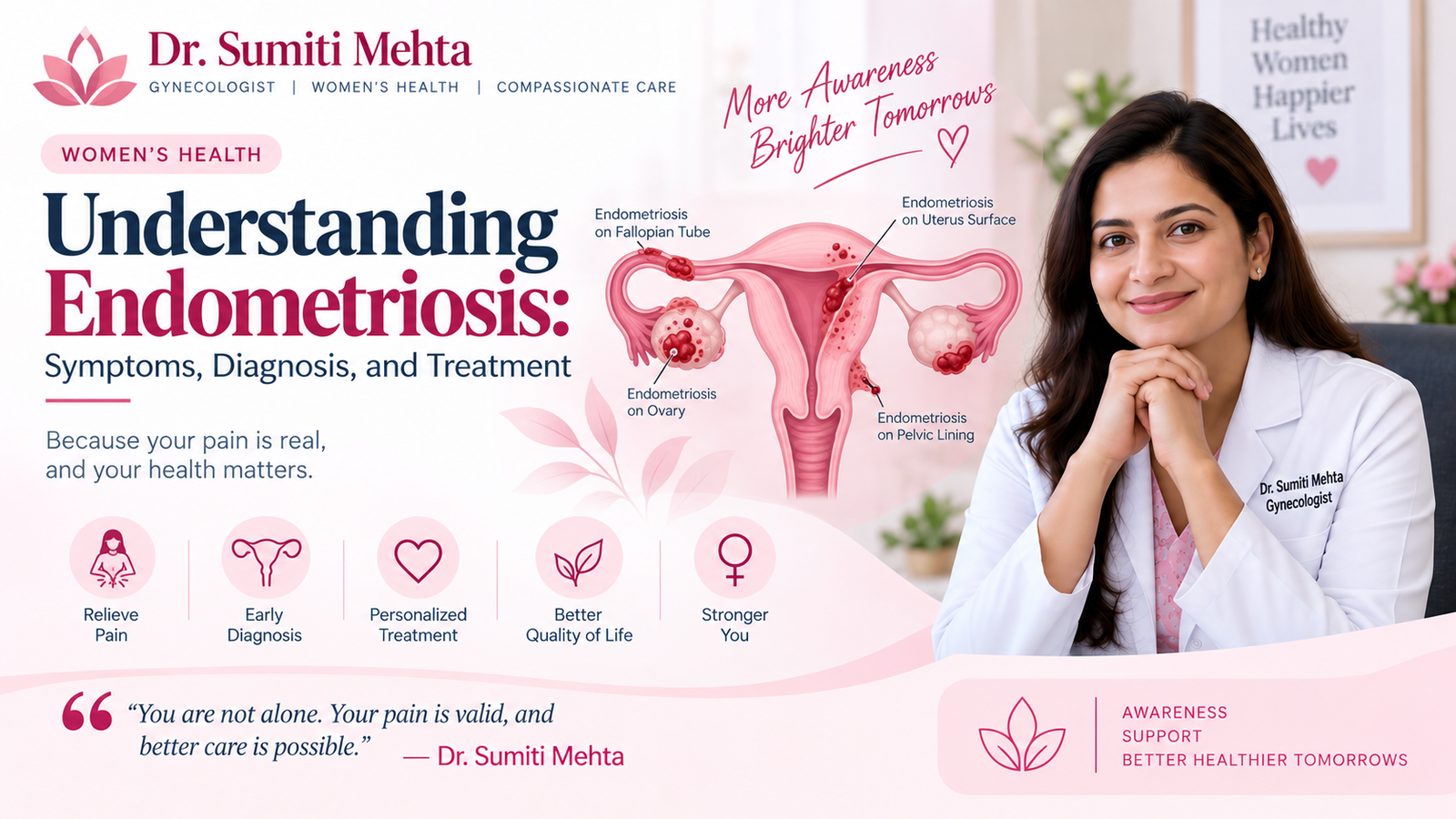

Understanding Endometriosis: Symptoms, Diagnosis, and Treatment
Many women experience painful periods, but severe pelvic pain should never be considered normal. One possible cause is Endometriosis, a common yet often overlooked condition that affects millions of women worldwide.
Early diagnosis and proper treatment can significantly improve quality of life and protect reproductive health.
What is Endometriosis?
Endometriosis occurs when tissue similar to the lining of the uterus grows outside the uterus. These growths are commonly found on the ovaries, fallopian tubes, pelvic lining, and surrounding organs.
Just like the uterine lining, this tissue responds to hormonal changes during the menstrual cycle, which can lead to inflammation, pain, and scar tissue formation.
Common Symptoms of Endometriosis
Women may experience different symptoms depending on the severity of the condition.
Symptom | Description |
|---|---|
Severe Period Pain | Pain that interferes with daily activities |
Pelvic Pain | Pain before or during menstruation |
Pain During Intercourse | Discomfort or pain during intimacy |
Heavy Menstrual Bleeding | Excessive bleeding during periods |
Infertility | Difficulty conceiving |
Fatigue | Persistent tiredness and low energy |
Digestive Problems | Bloating, nausea, constipation, or diarrhea |
Who is at Risk?
You may have a higher risk of developing endometriosis if:
A close family member has the condition
You started menstruating at an early age
Your menstrual cycles are short
You experience heavy menstrual bleeding
You have never been pregnant
Stages of Endometriosis
Stage | Severity |
|---|---|
Stage I | Minimal |
Stage II | Mild |
Stage III | Moderate |
Stage IV | Severe |
It is important to note that pain levels do not always correspond to the stage of the disease.
How is Endometriosis Diagnosed?
A gynecologist may recommend:
Medical History Review
Discussion of symptoms and menstrual history.
Pelvic Examination
To identify abnormalities or tenderness.
Ultrasound Scan
Helps detect ovarian cysts related to endometriosis.
MRI Scan
Provides detailed imaging in complex cases.
Laparoscopy
Considered the gold standard for confirming diagnosis.
Treatment Options
1. Pain Management
Medications may help reduce discomfort and inflammation.
2. Hormonal Therapy
Hormonal treatments can slow the growth of endometrial tissue and reduce symptoms.
3. Lifestyle Changes
Healthy Habit | Benefit |
|---|---|
Regular Exercise | Reduces inflammation |
Healthy Diet | Supports hormonal balance |
Stress Management | Improves overall well-being |
Quality Sleep | Helps recovery and healing |
4. Surgical Treatment
In severe cases, surgery may be recommended to remove endometrial growths and improve fertility outcomes.
Can Endometriosis Affect Fertility?
Yes. Endometriosis may affect fertility by causing inflammation, scarring, or blockage of reproductive organs. However, many women with endometriosis successfully conceive naturally or with fertility support.
Early treatment can improve reproductive outcomes.
When Should You Consult a Gynecologist?
Seek medical advice if you experience:
✅ Severe menstrual pain
✅ Chronic pelvic pain
✅ Pain during intercourse
✅ Heavy periods
✅ Difficulty getting pregnant
✅ Symptoms affecting daily life
Quick Comparison: Normal Period Pain vs Endometriosis
Feature | Normal Period Pain | Endometriosis |
|---|---|---|
Duration | 1-2 Days | Several Days or Longer |
Severity | Mild to Moderate | Moderate to Severe |
Daily Activities | Usually Possible | Often Difficult |
Fertility Impact | No | Possible |
Requires Medical Evaluation | Occasionally | Yes |
Final Thoughts
Endometriosis is a real medical condition that can affect physical, emotional, and reproductive health. Persistent pelvic pain should never be ignored.
With early diagnosis, personalized treatment, and ongoing care, women with endometriosis can manage symptoms effectively and maintain a healthy, active lifestyle.
Dr. Sumiti Mehta is dedicated to helping women understand their health concerns and receive compassionate, evidence-based care for every stage of life.