
A heavy period, medically known as menorrhagia, refers to menstrual bleeding that is unusually heavy or lasts longer than normal and may interfere with daily physical, emotional, and social activities. Signs of a heavy period can include needing to change a sanitary pad or tampon every 1–2 hours for several consecutive hours, using more than one form of protection to prevent leaks, waking at night to change menstrual products, or bleeding through clothes and bedding. Periods lasting longer than 7–8 days and passing large blood clots may also indicate heavy menstrual bleeding. Some women may additionally experience symptoms of anemia, such as unusual tiredness, dizziness, pale skin, shortness of breath, or weakness due to excessive blood loss.
What Are Heavy Periods?
A heavy period, medically known as menorrhagia, refers to menstrual bleeding that is unusually heavy or prolonged and may interfere with a woman’s daily physical, emotional, or social well-being.
Periods may be considered unusually heavy when bleeding lasts for more than 7 days, requires frequent changing of pads or tampons, or involves passing large blood clots.
Heavy menstrual bleeding can sometimes lead to iron deficiency and anemia, which may cause symptoms such as tiredness, weakness, dizziness, or shortness of breath.
Common Causes Of Heavy Periods
There are many conditions and factors that can cause heavy periods. Some of them include:
- Hormonal Imbalance: If there is an imbalance in the levels of progesterone and estrogen in your body, it can impact the lining of the uterus and your periods.
- PCOS: Irregular and heavy periods can occur because of hormonal changes that occur in the body due to polycystic ovary syndrome.
- Uterine Fibroids and Polyps: These can increase the bulk of the uterine lining, and cause heavy and prolonged periods.
- Adenomyosis and Endometriosis: Heavy and prolonged periods can occur because of these conditions.
- Thyroid Problems: Heavy and prolonged periods can occur with irregular periods because of thyroid disorders.
- Medications: Blood thinners can increase the flow of your periods. Certain contraceptive devices can also increase menstrual flow.
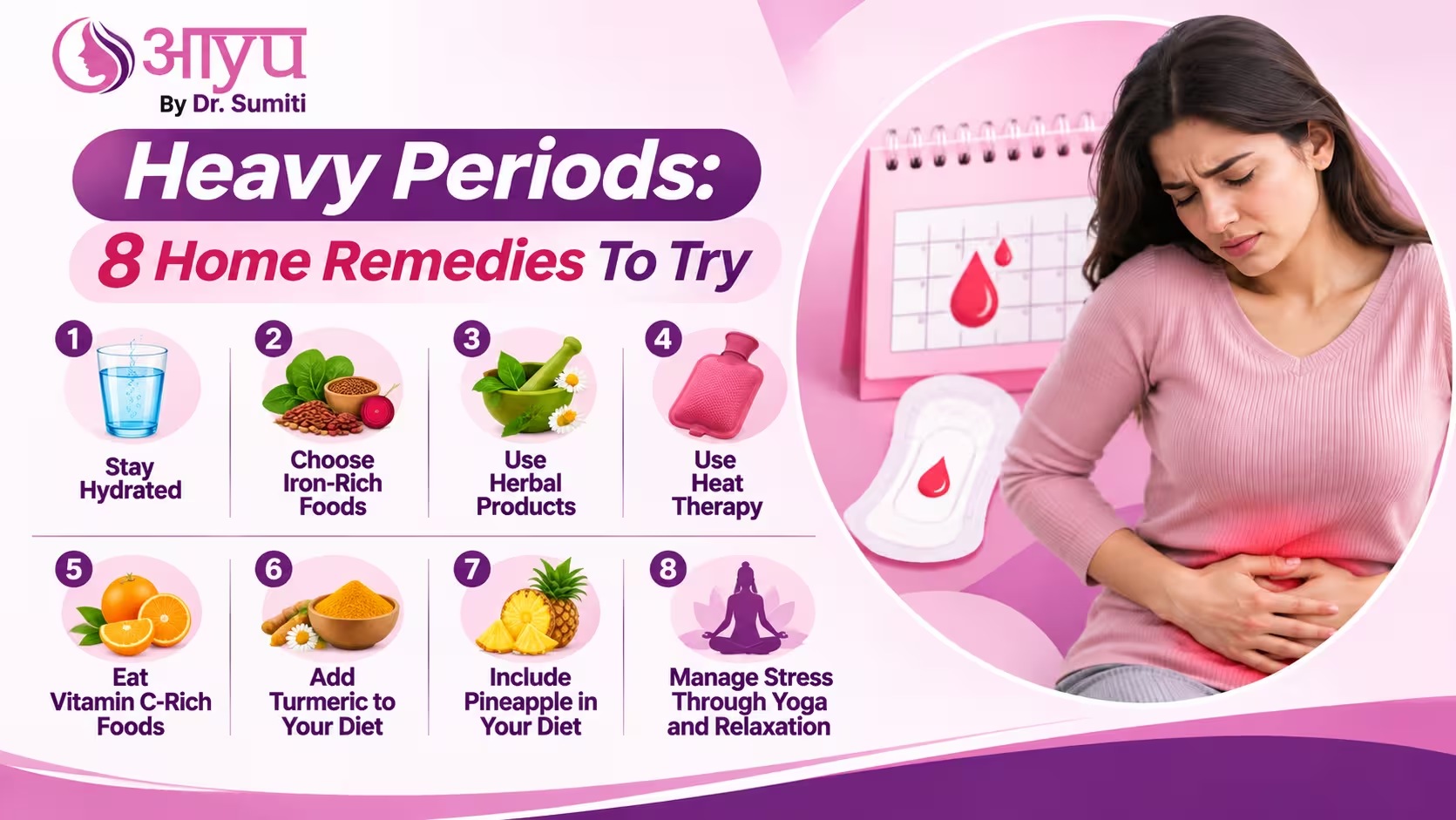
Heavy Periods: 8 Home Remedies to Manage Heavy Bleeding
Although home remedies may make you feel better and support your general health, there is limited evidence to show that they help stop or manage heavy menstrual bleeding.
Take the First Step Towards Better Women's Health Today
1. Stay Hydrated
It is recommended that you drink an adequate amount of water throughout your period, particularly when you have heavy blood loss. Water helps maintain normal body function and may prevent you from becoming dehydrated; however, it does not reduce your blood loss.
2. Choose Iron-Rich Foods
Iron deficiency is common in women with heavy menstrual bleeding and may increase their risk of anemia. Including food sources of iron such as meat, lentils, and beans, and taking vitamin C-rich foods such as oranges and guavas may enhance the absorption of iron. However, they do not manage heavy menstrual bleeding.
3. Use Herbal Products
Herbal products are traditionally used to manage symptoms of menstruation. However, there is inadequate information to suggest their efficacy in managing heavy menstrual bleeding. Consult your health care practitioner before using herbal products, particularly if you take other medications.
4. Use Heat Therapy
Applying a heat pad or heating pad to your lower abdomen may reduce menstrual cramps; however, it does not stop heavy menstrual bleeding.
Take the First Step Towards Better Women's Health Today
5. Eat Vitamin C-Rich Foods
Although vitamin C is beneficial for your health, there is no evidence to suggest that it can be used to manage heavy menstrual bleeding.
6. Add Turmeric to Your Diet
Adding turmeric to your diet is a good idea because of the anti-inflammatory benefits of curcumin. However, there’s not enough evidence to show that adding turmeric to your diet alleviates heavy menstrual flow. Use of high-dose supplements should be avoided without consulting your health care professional.
7. Include Pineapple in Your Diet
Adding pineapple to your diet can be a good idea because it provides good nutrients. However, there’s no evidence to show that adding pineapple to your diet helps alleviate menstrual blood loss.
8. Manage Stress Through Yoga and Relaxation
Some women may experience stress-related menstrual irregularities. There is good evidence to show that regular walking, yoga, and other stress management practices help improve the overall well-being of the person. However, these practices are not proven to manage heavy menstrual bleeding.
Home remedies cannot reliably manage heavy periods. Persistent or excessive bleeding should be medically evaluated.
Take the First Step Towards Better Women's Health Today
How Are Heavy Periods Diagnosed?
When diagnosing heavy periods, doctors review your menstrual history and may recommend the following:
- Blood Tests: To test for anemia and/or iron deficiency and to check thyroid function.
- Ultrasound: To evaluate the uterus and ovaries for fibroids and other abnormalities.
- Hysteroscopy: To examine the uterus for polyps and other abnormalities.
Not all women will need all of these tests. The tests recommended will be based on the individual woman’s symptoms.
When Should You See a Doctor for Heavy Periods?
Make an appointment with your doctor or go to your nearest urgent care facility if you are experiencing the following symptoms:
- Periods lasting longer than 7 days
- Soaking through a pad or tampon every 1 to 2 hours for many hours
- Passing large blood clots
- Severe cramps or pelvic pain
- Feeling extremely tired, weak, dizzy or short of breath
Heavy bleeding can make you feel faint, weak and short of breath. If this is the case, call an ambulance or go to your nearest emergency facility. Heavy bleeding during pregnancy also requires immediate assessment.
Tips to Manage Menstrual Health
There are a number of things you can do at home to help maintain and improve your overall health. These include the following:
- Eat a well-balanced diet that contains adequate iron and other essential nutrients.
- Stay hydrated by drinking enough water.
- Get enough rest and practice good sleep hygiene.
- Get adequate physical activity.
- Practice stress management.
Manage your menstrual health by tracking your cycles and noting any changes in your bleeding pattern. Always see your doctor before taking hormonal medicines or supplements.
Conclusion
Heavy periods can affect your comfort, daily routine, and energy levels. While home remedies such as staying hydrated and eating iron-rich foods may help support your overall health during menstruation, they cannot stop heavy menstrual bleeding or treat its underlying cause. If you are experiencing prolonged or unusually heavy periods, weakness, dizziness, or other concerning symptoms, it is important to consult a gynecologist. To understand the cause of heavy periods and discuss appropriate treatment options, you can consult Dr. Sumiti Mehta, one of the best gynecologists in Gurgaon.
Take the First Step Towards Better Women's Health Today
FAQs
1. How can I stop heavy periods naturally at home?
There is no way to stop heavy periods at home. However, there are ways to help your body during menstruation. Stay hydrated and eat iron rich foods.
2. What foods help manage heavy periods?
Includes spinach, lentils, beans, meat, and fortified cereals for iron. Includes oranges and guava for vitamin C to increase iron absorption.
3. How many days of heavy periods are considered abnormal?
Heavy periods are defined as bleeding for more than 7 days. Other signs may include needing to change your pads or tampons frequently and/or large blood clots.
Take the First Step Towards Better Women's Health Today
4. Can ginger or cinnamon tea reduce period flow?
There is not enough evidence to show that ginger or cinnamon tea can reduce heavy menstrual bleeding. These drinks should not replace your medical treatment.
5. Can heavy periods cause anemia?
Yes, heavy periods can cause you to become anaemic because of the blood loss. Anemia causes fatigue, weakness, dizziness and shortness of breath.
6. When should I see a gynecologist?
You should see a gynecologist if your periods are long and heavy and/or interfere with your day-to-day activities. You should see a gynecologist immediately if your heavy periods cause you to faint or be short of breath.