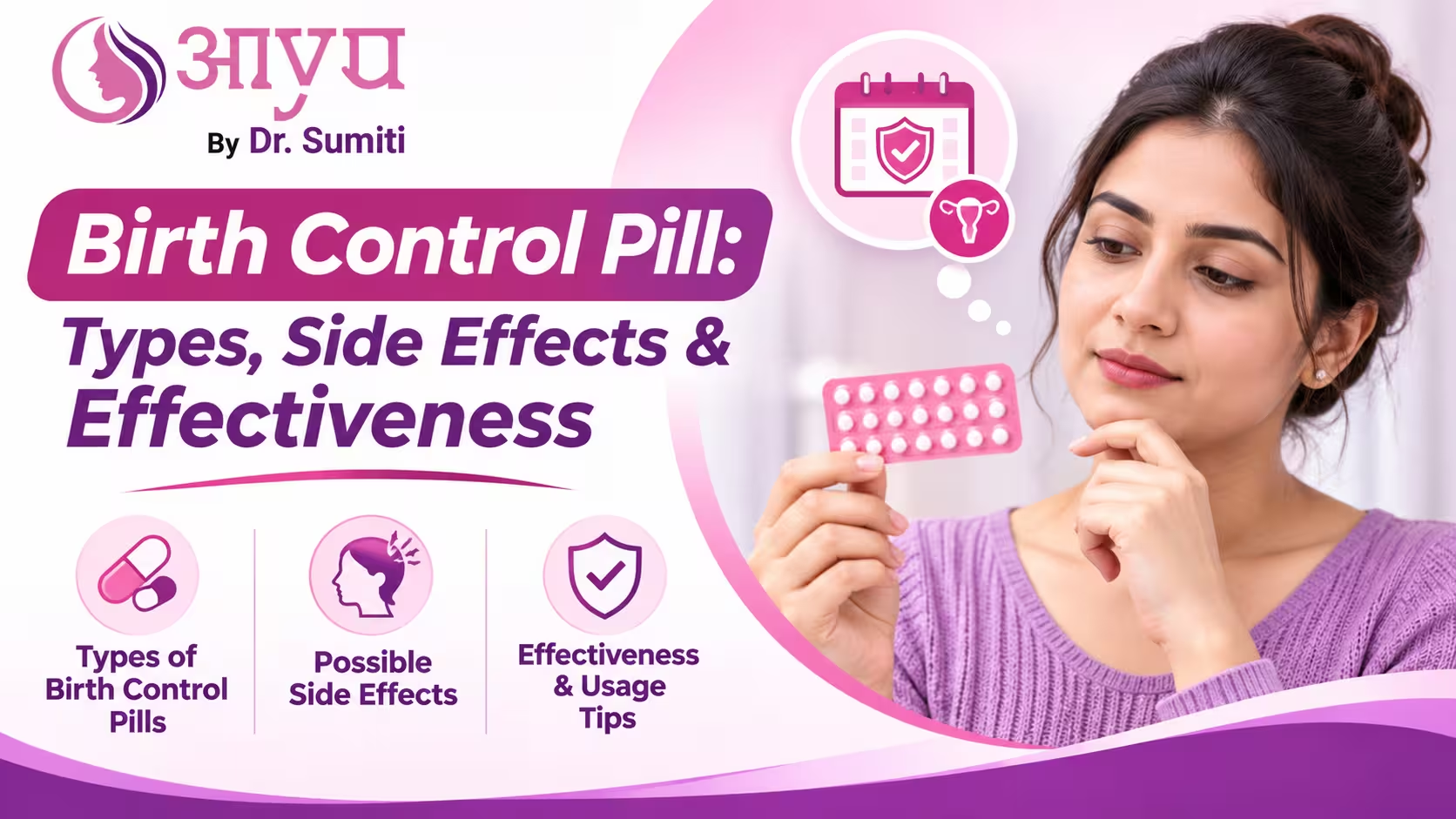

Birth control pills are daily oral medications used to prevent pregnancy and regulate menstrual cycles.
What Are Birth Control Pills?
Birth control pills, also known as contraceptive pills or oral contraceptives, are daily medications that use hormones to help prevent pregnancy. They work mainly by changing the body's hormonal signals to prevent ovulation and by making it more difficult for sperm to reach an egg.
When taken correctly and consistently, birth control pills can be highly effective at preventing pregnancy. Depending on the type of pill, they may also help make periods more regular or lighter, reduce menstrual cramps, improve acne, and help manage symptoms associated with certain conditions, such as endometriosis.
However, birth control pills do not protect against sexually transmitted infections (STIs). Using condoms can provide protection against many STIs while also offering additional protection against pregnancy.
What are the Different Types of Birth Control Pills?
There are two main types of birth control pills. The right option for you will be determined by your personal health and medical history.
1. Combined Oral Contraceptives (COCs)
These types of birth control pills contain two hormones: estrogen and progestin. To prevent pregnancy, they stop ovulation (the release of an egg) by the ovary. They also thicken cervical mucus, which makes it harder for sperm to reach the egg.
These types of birth control pills are available in various formulations:
- Monophasic: Contain the same amount of hormones in each active pill.
- Biphasic: Contain two different levels of hormones in the cycle.
- Triphasic: Contain three different levels of hormones in the cycle.
These types of birth control pills can also help alleviate symptoms related to heavy periods and menstrual cramps as well as help treat acne.
Take the First Step Towards Better Women's Health Today
2. Progestin-Only (Mini) Pills
These types of birth control pills contain only one hormone, progestin. They do not contain any estrogen.
Progestin-only pills mainly thicken cervical mucus, and some formulations prevent ovulation.
These types of birth control pills are usually recommended to women who cannot take estrogen-containing contraception, including women who are breastfeeding.
Also, timing is very important. Some of these birth control pills need to be taken in a strict time window each day in order to be effective. Be sure to check the directions for your specific birth control.
How Do Birth Control Pills Work?
Birth control pills change the hormonal signals in the menstrual cycle to prevent pregnancy. There are three main ways in which different kinds of birth control pills work:
- Preventing ovulation: With combination pills, the eggs are not released from the ovaries each month.
- Thickening cervical mucus: Sperm can not travel through the thick cervical mucus to reach the egg.
- Changing the lining of the uterus: Hormones change the lining of the uterus to prepare it for possible pregnancy.
Birth control pills have a combination of these effects to reduce the chances of pregnancy.
How Effective Are Birth Control Pills?
Pills can be considered fully effective if they are taken exactly as prescribed and without missing any doses. Pills lose effectiveness if they are not taken regularly, and users can forget to take them. It is also estimated that, with perfect use, combination birth control pills have an effectiveness of about 99%. With typical use, it is estimated they are about 93% effective. If pills lose their effectiveness, missing a dose, starting a new pack late, vomiting, or medication interactions can also affect their overall protection.
The best protection is provided if birth control pills are taken exactly as prescribed and if the user strictly follows the instructions for missing a dose. If you feel that your protection is at risk or you are not entirely certain about your contraceptive methods, talk to your healthcare professional about alternative options and/or emergency contraception.
What Are the Common Birth Control Side Effects?
Birth control pills have side effects similar to other medications containing hormones. These side effects occur as the body gets used to the new hormonal changes and typically resolve after the first few months of use.
Some common birth control side effects include:
Nausea- Many women experience mild nausea after starting birth control pills and may get better as the body gets used to the hormones. Taking the pill with food may also help.
Headaches- New or worsening headaches should always be reported to a doctor as they may not be related to birth control.
Breast Tenderness- The breast may feel sore, sensitive, or slightly swollen. This sensation may occur with other new or worsening symptoms of PMS and may improve after a few months.
Spotting Between Periods- New users may experience spotting between periods, especially in the first few months of use or with use of a new type of birth control. Spotting may also occur if pills are missed.
Mood Changes- New users may also notice mood changes while using hormonal contraception.
Changes in Menstrual Bleeding- Birth control may make periods lighter, shorter, and more predictable. Women may also notice other changes in their usual bleeding patterns.
If side effects do not improve after a few months and are bothersome, be sure to talk with your OB-GYN to find other options for contraception.
Take the First Step Towards Better Women's Health Today
Are There Any Serious Risks of Birth Control Pills?
Although birth control pills are generally safe for the majority of women, people with certain health concerns may experience other health concerns as a result of taking birth control pills.
There are several rare but serious risks associated with hormonal birth control, including:
- Blood clots in the legs (Deep Vein Thrombosis)
- Blood clots in the lungs (Pulmonary Embolism)
- Increased blood pressure
- Stroke
- Heart Attack
Risk factors may increase for women who are over the age of 35, smoke, have a previous history of blood clots, migraine with aura, cardiovascular issues, or other conditions.
You should seek medical attention immediately if you experience any of the following symptoms: chest pain, shortness of breath, sudden severe headache, changes in eyesight, or pain, swelling in the leg.
Discuss your medical history with your doctor and be open about any health concerns you may have before taking birth control.
What Are the Benefits of Taking Birth Control Pills?
A common benefit of taking birth control pills is that they can help lessen the duration, pain, and discomfort of your period.
- It can also help manage heavier periods.
- Acne may also improve.
- Birth control can help manage symptoms of PCOS and Endometriosis.
- It may lessen the pain associated with these conditions.
Ask your doctor to explain if these benefits may be relevant to your health and situation.
Long-term use of oral contraceptives can also lessen your risk of developing ovarian and endometrial cancers.
Who Shouldn't Use Birth Control Pills or Should Use Them With Caution?
There are reasons why some people are not able to use certain birth control methods. For instance, there are some medical conditions that increase the risks of using hormonal contraceptives.
Women need to discuss alternative methods with their doctors if they:
- Have a history of blood clots, stroke, or certain heart conditions.
- Have uncontrolled high blood pressure.
- Are over 35 and smoke.
- Experience migraine with aura.
- Have certain liver conditions.
- Have or have previously had certain hormone-sensitive cancers, including breast cancer.
Women who breastfeed may be told to use progestin-only pills in the early postpartum, since estrogen-containing pills may affect milk supply.
A gynecologist may review your medical history to determine the safe birth control methods for you.
What Happens If You Miss a Birth Control Pill?
If you miss a birth control pill, this may reduce its effectiveness, and you may be at risk of an unintended pregnancy.
What you should do depends on the type of pill you use and how many doses you have missed.
- Check the instruction leaflet that came with your birth control pill pack.
- Take the missed pill, if any, based on the instructions.
- Continue with your regular birth control schedule, and use back-up contraception if recommended.
- If you have had unprotected sex and missed several pills, consult your doctor if you need to use emergency contraception.
Do not assume that all birth control pills have the same missed-pill instructions. Progestin-only and combination pills may have different instructions.
Take the First Step Towards Better Women's Health Today
Conclusion
Although many people think of birth control pills as a way of avoiding pregnancy, they can also provide benefits like lighter and shorter periods and cramp relief. However, there are many types of pills and not all of them are effective for all women.
Different hormones can have different reactions in women. Some women are more at risk than others for developing complications from the birth control pill. If you are thinking of going on the pill or are currently on the pill and having side effects, you should make an appointment with Dr. Sumiti Mehta, who is one of the best gynecologists in Gurgaon , to help you make the right decision for you.
Frequently Asked Questions (FAQs)
1. What are the most common birth control pill side effects?
Side effects can include mood changes, headaches, spotting, breast tenderness, and nausea.
2. How effective are birth control pills?
If consistently taken, they are about 91% effective.
The effectiveness of birth control pills depends on how consistently they are used. With perfect use, they are more than 99% effective, and with typical use, they are approximately 93% effective. Consistent use is essential for preventing pregnancy.
Take the First Step Towards Better Women's Health Today
3. Can birth control pills cause weight gain?
Most studies fail to prove the use of birth control pills leads to significant weight gain. However, individual cases may differ.
4. Do birth control pills guard against STIs?
No. Birth control pills are meant to only prevent pregnancy. For guarding against STIs, use of other barrier methods, like condoms, is imperative.
5. Can I use birth control pills while I am breastfeeding?
Pills containing only progestin are safe to use while breastfeeding. Pills containing both estrogen and progestin may reduce milk supply and are, therefore, not safe to use while breastfeeding.
6. What happens if I stop using birth control pills?
After using birth control pills, it generally takes a while for full fertility to return. It may also take some time for your menstrual cycle to return to its normal state.
Take the First Step Towards Better Women's Health Today
7. Which birth control pill should I use?
The best option is determined by your medical history, your age, your lifestyle and your contraceptive needs. Your gynaecologist is the best person to evaluate your health and determine a pill which best suits you.